







Vacant property and absentee owner research work differently from standard foreclosure listing research. A user may need to check whether a property is owner-occupied, empty, rented, held by an investor, tied to another mailing address, or owned through a company. None of these signals automatically means distress or willingness to sell. This article focuses on property record sources, owner data, address checks, and ownership research tools, not legal advice or pressure-based outreach. Every record should be checked against county data, property details, mailing information, and local communication rules before any outreach.
ForeclosureHub stays first because it gives foreclosure-specific property context before users move into vacant property or absentee owner research. DataTree and Estated bring deeper property records and ownership data. ListSource and Melissa Lookups help with owner lists, address checks, and quick property details. PropertyScout.io focuses on owner lookup, mailing addresses, parcel search, and reverse owner research. Reonomy adds a commercial ownership layer for users who need to look beyond residential records.
Each source has a separate role, so the list should not read like seven versions of the same owner lookup tool:
- ForeclosureHub: Foreclosure-specific property context, owner data, skip tracing, alerts, and records;
- DataTree: Ownership, tax, mortgage, property reports, and recorded document research;
- Estated: Property data API with owner, deed, boundary, assessment, and valuation details;
- ListSource: Absentee owner lists, homeowner data, and targeted mailing list research;
- Melissa Lookups: Address-based property information, owner names, assessed values, and map context;
- PropertyScout.io: Owner lookup, mailing address checks, parcel search, and reverse owner research;
- Reonomy: Commercial property ownership data, LLC research, and off-market CRE owner lookup.
This article is about checking ownership and property context, not assuming every vacant or absentee-owned property is a lead. The stronger process starts with the record, then moves into verification, address checks, and contact review.
1. ForeclosureHub
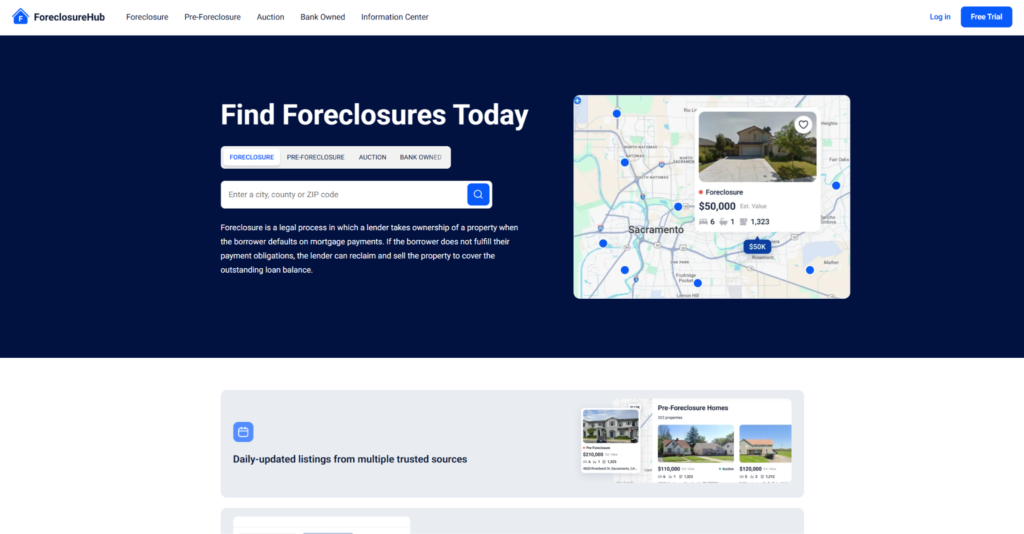
ForeclosureHub takes the first position because vacant and absentee owner research needs property context before outreach or deeper checks. Users can search pre-foreclosure, foreclosure, bank-owned, and auction listings across the United States. The ForeclosureHub vacant property search tool gives users a focused way to review distressed-property data before they compare outside owner lookup tools. The platform provides owner details, mortgage records, tax data, transaction history, market information, and free skip tracing. Some county data may update faster than others, and there is no dedicated mobile app yet.
ForeclosureHub should not be framed as a pure vacant property database. Its role here is to help users understand whether a distressed-property record deserves more owner and occupancy research. Property status, ownership data, tax context, and market information can make the next check more grounded. Free skip tracing can support owner research, but contact data still needs verification before outreach. ForeclosureHub works best as the first layer before users move into absentee owner lists or address-based lookup tools.
ForeclosureHub connects distressed property research with owner and market context. It should be used as a research source, not legal or financial advice:
- Pre-foreclosure, foreclosure, bank-owned, and auction listings;
- Free skip tracing included with every property search;
- Owner, mortgage, tax, assessment, and transaction details;
- Market data for sale, rental, and comparable property checks;
- Saved searches and email alerts for matching properties.
ForeclosureHub gives users a cleaner starting point before they check vacancy, absentee ownership, mailing address differences, or outside record sources.
2. DataTree
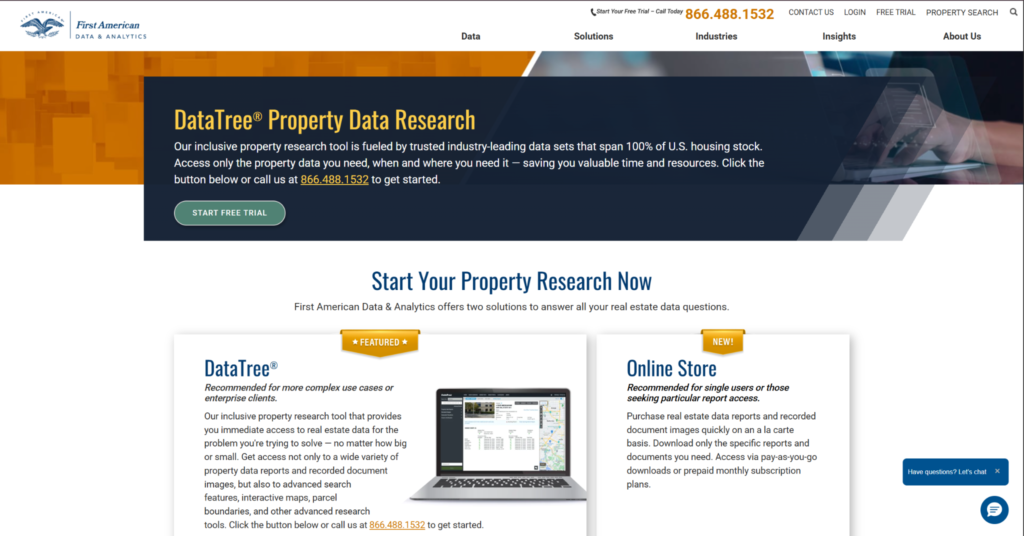
DataTree brings a deeper property record and document research layer to the article. Users can review ownership, tax, mortgage, property data, recorded documents, and reports depending on the search. That makes it practical when a user needs formal property background before treating a vacant or absentee-owned home as a lead. Public record data still needs interpretation because ownership, liens, and documents can carry details that are easy to miss. DataTree works better for record review than for quick lead browsing.
Absentee owner research often starts with mailing address differences, ownership history, mortgage records, and document trails. DataTree can help users review those details before deciding whether a property needs more investigation. It can support title-adjacent research, but it should not replace a title company, attorney, or county office when the stakes are high. Users should check deed history, liens, tax details, ownership changes, and property characteristics carefully. DataTree is a better match for users who want deeper property records before outreach.
DataTree is more about property records and documents than simple owner prospecting. This can be valuable when vacancy or absentee ownership needs evidence behind it:
- Ownership and property data research;
- Tax, mortgage, and recorded document access;
- Property reports and ownership history;
- Support for deeper record review;
- Better for due diligence than simple lead browsing.
DataTree can help users understand the record behind a property before making assumptions about vacancy or absentee ownership.
3. Estated
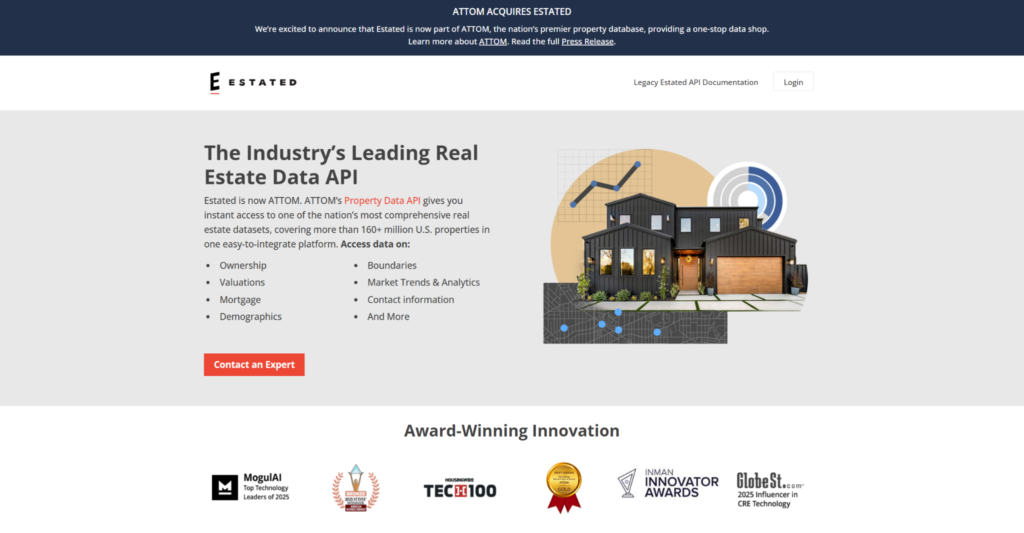
Estated gives the article a structured property data angle. Its records can include owner details, deeds, assessment data, valuation information, and boundary data. The platform is more relevant for teams, developers, analysts, and investors who want property records in a cleaner data format. That matters when vacant or absentee owner research needs to be repeated across many properties instead of checked one address at a time. API data still needs quality checks and source review.
Vacant and absentee owner research can become messy when users rely only on manual searches. Estated can help when property details need to be pulled into internal systems, analysis tables, or repeatable review processes. Owner records, deeds, assessments, and values can help users understand the property before outreach. Users should still compare results against official records when accuracy matters. Estated works best when structured property data is more important than a simple list download.
Estated is not mainly a marketing-list platform. Its value is in property data that can support analysis, screening, or internal tools:
- Owner and property record data;
- Deed, assessment, and valuation details;
- Boundary and parcel-related information;
- API-based property data access;
- Structured ownership research.
Estated can support absentee owner and vacant property research when users need clean data fields instead of only a manual lookup.
4. ListSource
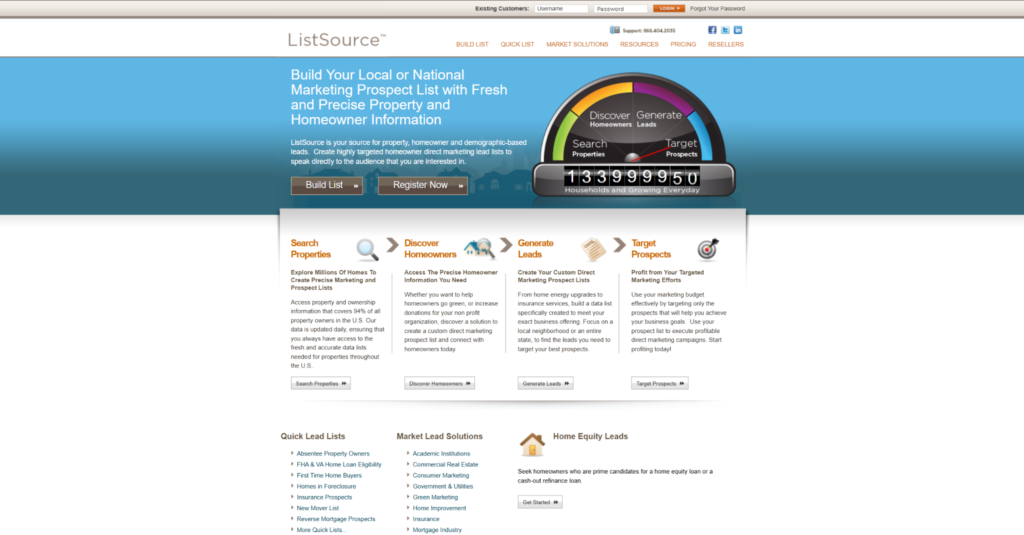
ListSource adds a targeted owner list angle to the article. It offers homeowner and property-based lists, including absentee owner lists. That makes it practical when a user wants to build a mailing or research list based on ownership and property filters. Absentee owner status should still be treated as a data point, not proof that someone wants to sell. ListSource is more relevant for list building than for deep property record review.
ListSource can help users narrow a market by geography, property type, ownership status, and owner profile. This can help investors identify absentee-owned homes before doing deeper property checks. The data should still be cleaned, verified, and compared with current property records before outreach. List quality depends on filters, timing, and how carefully the user reviews the results. ListSource works best when users need a targeted starting list, not a finished decision.
ListSource is about building owners and property lists. Users should treat the list as a starting point for review rather than a ready-to-contact file:
- Absentee owner lists;
- Homeowner and property-based lead lists;
- Geographic and property filters;
- Targeted mailing list research;
- Starting point for owner list campaigns.
ListSource can help users build an absentee owner list, but the records still need verification before any outreach.
5. Melissa Lookups
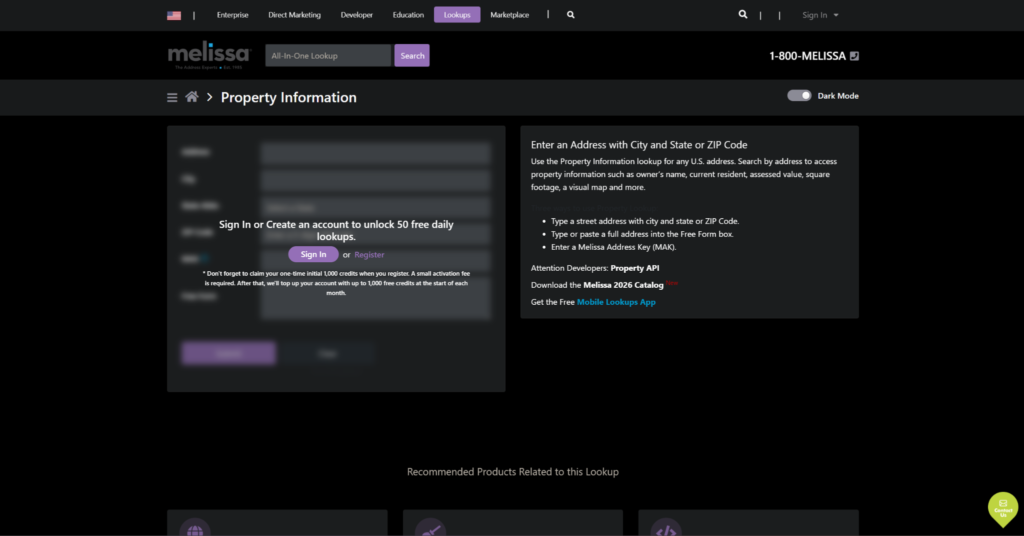
Melissa Lookups adds an address verification and property information layer. Users can search for an address to see property information such as owner name, current resident, assessed value, square footage, and map context. This can help when a user needs a quick property check tied to one address. A lookup tool is not the same as a full investor research platform, but it can answer basic address questions fast. Melissa Lookups works best when the user needs simple address-based property context.
Vacant or absentee owner research often starts with a basic address question. Users may need to check whether an address is deliverable, who is connected to the property, and what the public property details show. Melissa Lookups can support this early check before users move to deeper records or paid datasets. Owner names, residents, values, and maps should still be checked against official sources when accuracy matters. Melissa Lookups fits simple address-based research and data verification.
Melissa Lookups is helpful when the user needs a quick property information check. It should not replace county records, title review, or full due diligence:
- Address-based property lookup;
- Owner name and current resident details;
- Assessed value and square footage information;
- Visual map context;
- Quick property checks.
Melissa Lookups can help users check basic address and property details before moving into deeper owner research.
6. PropertyScout.io
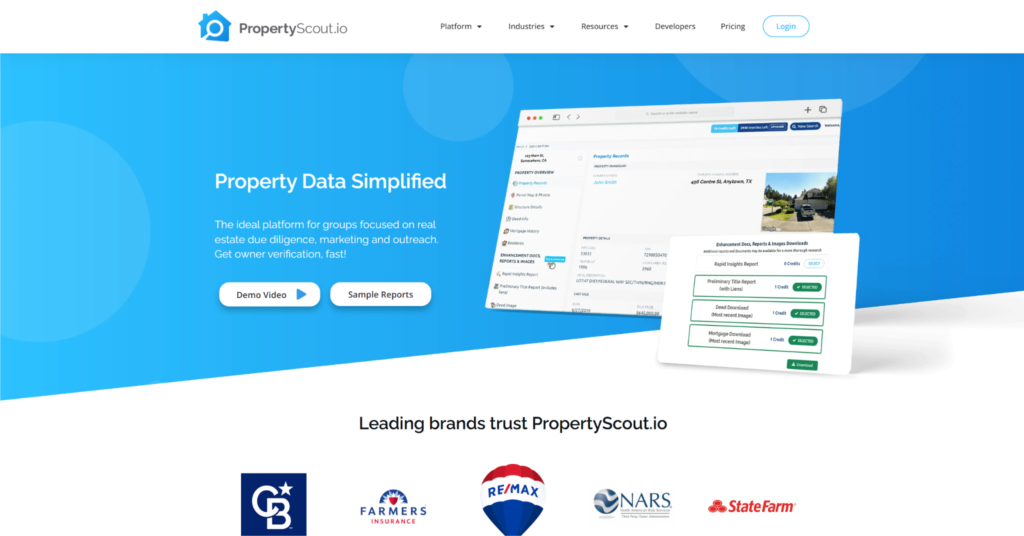
PropertyScout.io gives the list an owner lookup and a mailing address angle. Users can search by address, parcel number, map, longitude and latitude, or reverse owner lookup. That flexibility helps when the user needs to verify the owner’s name, mailing address, other properties owned, or basic ownership details. Owner lookup data still needs confirmation before outreach. PropertyScout.io is relevant when the user wants several ways to connect a property with an owner record.
Absentee owner research often depends on matching the property address with the mailing address and owner profile. PropertyScout.io can support that work by helping users compare owner details and lookup methods. Reverse owner search can be helpful when users want to see other properties tied to the same owner. That can improve research, but it should not be treated as proof of motivation or distress. PropertyScout.io works best before communication or deeper property checks.
PropertyScout.io is about owner verification and flexible property lookup. This can help users clean up research before building a contact plan:
- Owner name and mailing address lookup;
- Search by address, parcel, map, or coordinates;
- Reverse owner lookup;
- Other properties owned, where available;
- Owner verification before outreach.
PropertyScout.io can support owner research, but users still need to verify the record before relying on it.
7. Reonomy
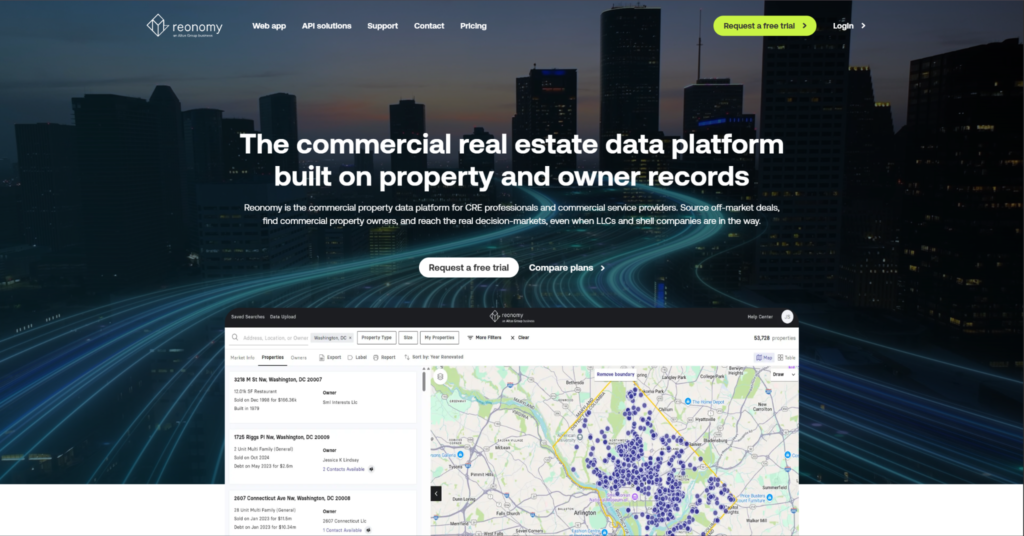
Reonomy adds a commercial property ownership layer to the Top 7. It focuses on commercial real estate data, ownership intelligence, and off-market property research. This matters when absentee owner research moves beyond single-family homes and into LLC-owned or commercial assets. Commercial ownership can involve shell companies, holding entities, and decision-makers that are harder to identify. Reonomy is most relevant when the user needs commercial owner context.
Public records may show an LLC rather than the actual person or company behind a commercial property. Reonomy can help users research ownership structures, decision-makers, and contact paths for commercial real estate. That is a different problem from building a simple absentee homeowner list. The data still needs review before outreach, especially when ownership is layered. Reonomy is a better fit for users who need commercial property owner research rather than residential list building.
Reonomy is included because absentee ownership is not only a residential issue. Commercial property research often needs deeper owner intelligence:
- Commercial property ownership data;
- LLC and entity-level owner research;
- Off-market CRE property research;
- Decision-maker and contact context;
- Commercial owner lookup.
Reonomy can help users research commercial ownership, but records and contact paths still need careful checking.
Final Thoughts
Vacant property and absentee owner research should start with evidence, not assumptions. ForeclosureHub gives users foreclosure-specific context before they compare owner records, address tools, and list sources. DataTree, Estated, Melissa Lookups, and PropertyScout.io support different levels of property and owner verification. ListSource is better for targeted owner lists, while Reonomy helps when ownership research moves into commercial real estate. Before treating any property as worth outreach, users should check the property record, owner name, mailing address, and source behind the data.